Wednesday, July 8, 2015

Pollen Dauber


Pollen dauber, why should the birds and bees have all the fun? This is the ultimate gardening experience, creating something new from the materials of nature.

Hybridizing requires some knowledge, there are many resources, some skill, which can be acquired through experience, patience, time and if you become dedicated some land. 

If I had the land say five to ten acres and a greenhouse I would daub many types of favorite plants: Erythroniums, Cimicifuga, Trollius, various beardless iris particularly Siberians, Laevigatas, Cristatas and then Martagon Lilies.

"Bringing Beauty to Life" is the motto of SummerChase Gardens. I have created new beauty for my own enjoyment and given this beauty for others to enjoy. The process creates living works of art. Hybridizing has refined my understanding of color, form, and texture. I have become in tune to the cycle of nature, insects, plants, soil, weather and climate. These are a few of the lessons to be learned.

Here are pictures of Siberian Iris selections lined out either last year or two years ago. Some are being grown for introduction ( one has been ) or as a further breeding source.  Some of these plants will never be registered or introduced.


    A dwarf Siberian, Summerchase Advent, two year old clump for demonstration and breeding.
.
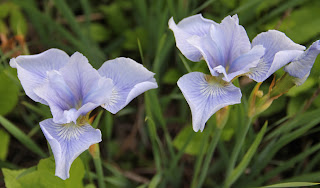
Here are some dwarf Siberian Iris for final evaluation and increase prior to registration and introduction.


Flower like faded blue jeans


A nice light blue, one of a couple lined out for increase.


Large flowers on 10" plant.


Thursday, May 14, 2015

Spring Fling 2015


Transition from winter to spring 2015
My ambition soars ever higher as my health fails but I will not be deterred.
Gasteria obliqua, Curtis
Botanical Magazine
I became fascinated with gasteria in the fall and have two postings yet incomplete on what I have learned and collected. I started a board on Pinterest about lilies and gasteria.
Throughout spring I spoke on various horticultural topics, with my wife Mashell, we sold bulbs, those funds go into gardens.
Now have three geographically separate gardens; our private garden, breeding production garden and a new seed patch of material stratified over the winter.
Our private garden is broken down into various components which incorporate the entire property.  A rock garden which is being expanded.  Butterfly garden where we are adding density to eliminate weeds.  A Siberian Iris planting where we added Little Joes (see posting) and trollius. The shade garden under White Oaks next to a Siberian Iris collection. Finally a border of many lilies planted in blocks of various types.
Iris cristata "Powder Blue Giant"

In the shade garden Iris cristata, Canadian Anemone and  wild ginger, Asarum canadense, are blooming. We are adding density to this garden also.  In late April we added Yellow Ladyslippers, Cypripedium parviflorum. A number of spring ephemerals will be added. Thalictrum ‘Elin’ has been removed, way too tall at 6 feet, four large pots  will be traded for other plants. ‘Elin’ has been replaced with Thalictrum rochebruneanum, dioicum and dasycarpum.  These create a centerline along with martagon lilies creating height and backbone. I will move some hosta, add more, with Woodland Phlox and Geranium maculatum for added color.  
Wild Ginger, Asarum canadense
The back of the house is a lily garden, blocks of many types more blocks have been added there.
When Mashell and I married four years ago I sold my house and moved my gardens to our current location. Some materials were planted haphazardly. My Siberian iris collection was thrown in about the yard, the balance on a sandy western facing slope, not ideal conditions. This collection will be replanted to other spaces. The new garden will be another type of rock garden, Bearberry, blueberries, Vaccinium angustifolium and Wintergreen, Gaultheria procumbens, will be the base of this garden area.
A lot of pleasurable work.

Thalictrum breaks out of the ground

Saturday, March 14, 2015

Norman Borlaug

The Greatest American Hero and his call to mankind.

Dr. Normal Borlaug was a hunger fighter, “The man who saved a billion lives”. After changing the emphasis of his education from forestry to plant pathology and genetics, he tasked himself to the production of new varieties and methods to feed the burgeoning population of the world. Throughout his life he worked to improve wheat and later rice crops, with new high yield, disease resistant varieties. These new varieties paired with intensive farming techniques lead to the “Green Revolution”. Dr. Borlaug sought opportunities to stave off starvation in nations with exponential population growth. He sought after alliances with governments and organizations to directly address and apply solutions to starvation.
In 1970 Dr. Borlaug received the Nobel Peace Prize. In 2014, the one hundred anniversary of his birth a statute was unveiled in the US Capitol. His work has had tremendous impact on mankind. When discussing his achievements many people call him the “Greatest man to have ever lived”.
In his acceptance speech for the Nobel Prize, Dr. Borlaug challenged the governments of the world to address the “Population Monster” which could outpace his and successors work.  He stated his work gave mankind a few decades to stave off hunger but it must be paired with population control.
My father was born in 1899 the world population was 1.6 billion humans.  I was born in 1952 the population was approximately 2.6 billion. I graduated from high school the same year Dr. Borlaug received his peace prize, the human population was 3.7 billion individuals. Today we have exponential growth to 7.2 billion persons. There is a finite amount of arable land. Our passions may exceed the science and technology as applied by Norman Borlaug’s peers.
 I was once told a family can receive all the yearly nutrition its needs from the milk of one cow and a couple acres of potatoes, is this my grandchildren’s future?
Responsible population control was discussed openly in the 70’s and I hear little on this “time bomb” topic today, population growth demonstrates the fact.  This issue is surrounded by hot topics: contraception, abstinence, and reduction of infant mortality, abortion, status of women, sterilization, legislation, and family planning. We need to readdress this issue again as individuals, as cultures as societies. We need to learn from what has been practiced currently in some nations and find workable solutions. Dr. Borlaug’s efforts, a hunger fighter’s efforts, should not go in vain.


Tuesday, December 30, 2014

Sweet Fern

Comptonia peregrina


For the last few years I have conducted seminars on groundcovers and discussed Sweet Fern, Comptonia peregrina. Most gardeners are not aware of this small shrub. Propagation issues have kept it from widespread introduction to the retail nursery trade. This problem has been generally resolved (http://www.amerinursery.com/article-8091.aspx) so availability should multiply.


I discuss this boreal groundcover with others who thrive in poor infertile or rocky soils; Bearberry, (Arctostaphylos Ursa-uvi) , Lowbush Blueberry (Vaccinium angustifolia), Northern Bush Honeysuckle, (Diervilla lonicera) and Common juniper (Juniperus communis). Sweet Fern is a pioneer plant spreading into disturbed soil, it can fix nitrogen and is salt tolerant. Some say it can be invasive.


Found in dry pine or oak woodlands in shallow soils over bedrock. The dominant shrub layer species are Lowbush Blueberries and Northern Bush Honeysuckle with larger Juneberries, Hazelnut, Prairie Willow and Staghorn or Smooth Sumac. The canopy is made of Red and White pine or Red Maple, Pin and Red Oak. The sub-canopy can be comprised of Mountain Maple, Mountain-ash, Quaking Aspen and Paper Birch.


How can Sweet Fern be used in landscapes? Mixed with any of the aforementioned groundcovers Sweet Fern can be used in many tough growing locations.  Edges of roadways, sidewalks and drives where salt is sprayed throughout winter, Sweet Fern can be utilized with Bearberry providing varying height. As a turf replacement in any dry growing conditions. Sweet Fern foliage is fragrant adding scent to any area. Wild Rose grows with Sweet Fern in the wild. Shrub roses such as Nearly Wild would add color. Native to rocky environments Sweet Fern could be used surrounding rock clusters.

Seek out Sweet Fern, I hope knowing something of its native ecology can help you find opportunities for this shrub in your landscape.

Tuesday, December 9, 2014

Little Joes


Two species of tall, pink-flowered Eupatorum, Joe pye weed, grow in my area maculatum and purpurea. Spotted Joe pye weed, maculatum has flat topped flower clusters at five feet tall. Sweet Joe pye weed, purpurea has dome shaped clusters at seven feet tall. Commonly called Eupatorum in the nursery trade they are now classified as Eutrochium. 

Joe pye weed is an integral component of the modern perennial garden. I have grown this autumn flowering perennial in many gardens where it adds height and attracts many insects, especially butterflies. These upright growers provide strong structure, emerge late, they quickly grow in a continental climate. 

A mass of Little Joe
I have also added two little Joe pye weeds, Little Joe and Baby Joe.  Little Joe, Eutrochium dubium grows in similar conditions to the large species, moist fertile soils, it reaches a mature height of four feet.  E. dubium is commonly called Coastal Plain or Eastern Eutrochium, Baby Joe is another selection of dubium growing to 2-3 feet.

Best in a consistently moist site, the leaves will curl and scorch if too dry. The plants are deer and rabbit resistant. Eutrochiums tolerate alkaline to acidic soils in full sun to partial shade. Do not cut back plants in the fall, they provide excellent winter interest and forage for many birds.
Both little "Joes" are licensed, propagation is prohibited without permission.

A mass in fall color

A young Joe among Siberian Iris
Baby Joe

White flowered species now make up the genus Eupatorium. This spring I plan to purchase a couple selections of Eupatorium fortunei, they also have deep pink flower clusters. "Pink Frost' has variegated foliage. 'Pink Elegance' and 'Fine Line' are all bushy and roughly three feet tall.


Saturday, November 15, 2014

Oak of woodland and savanna

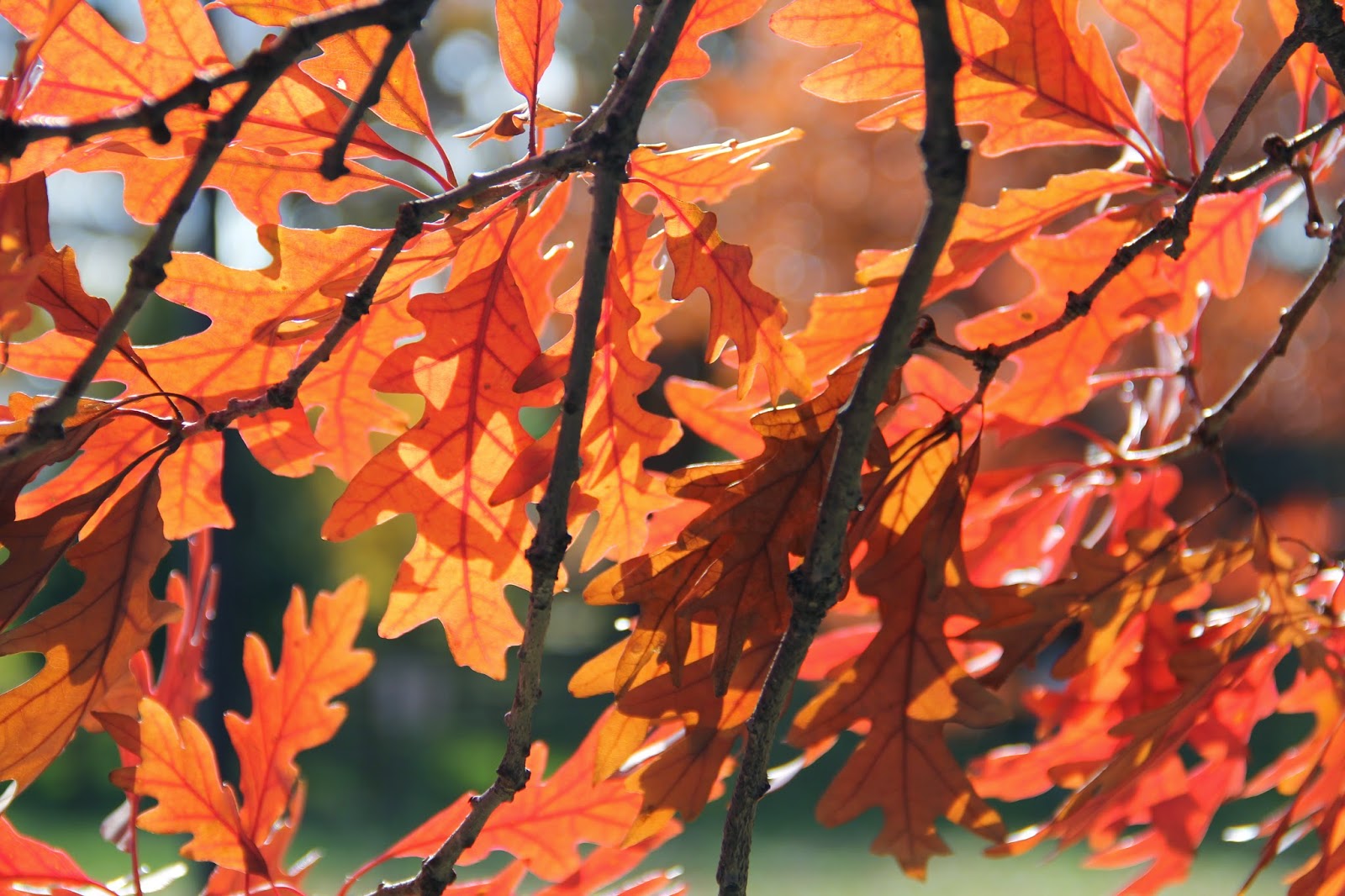
The area I live in was once dominated by oak woodland and savannas surrounding large wetlands, an ecosystem maintained by fire. Today many wetlands have been drained and the fires are suppressed. Large oak woods have been cut down and burned for development. Still remnants of great oaks persist and are never more prominent than in Fall color.

White, Bur, Red and Northern Pin Oak giants are slowing being lost to the ravages of old age and neglect. These are replaced by many varieties of maple and exotic ornamental trees in residential and commercial lawnscapes. These are easy to care for, lacking the large persistent leaves and acorns of oaks. Their scale works in small lots unlike the parkland often required for towering oaks.

Many of our eastern broadleaf forest oaks are slow growing reaching great age. They transcend our small lives outliving many generations.  They average two to three hundred years old, some living to four hundred and fifty years or more. A Bur Oak can be one hundred and thirty feet tall and as many wide. These trees require respect!


Oak wood in late morning sun.


Towering oak, wider than tall, in parkland.


Premier North American hardwood.
Majestic stand in morning light.

Basking in late afternoon sun.

Proud to be a tree hugger!

Sunday, September 28, 2014

Interstate State Park, Taylors Falls MN


This is the first post discussing famous places of scenic beauty, garden design and inspiration from nature.

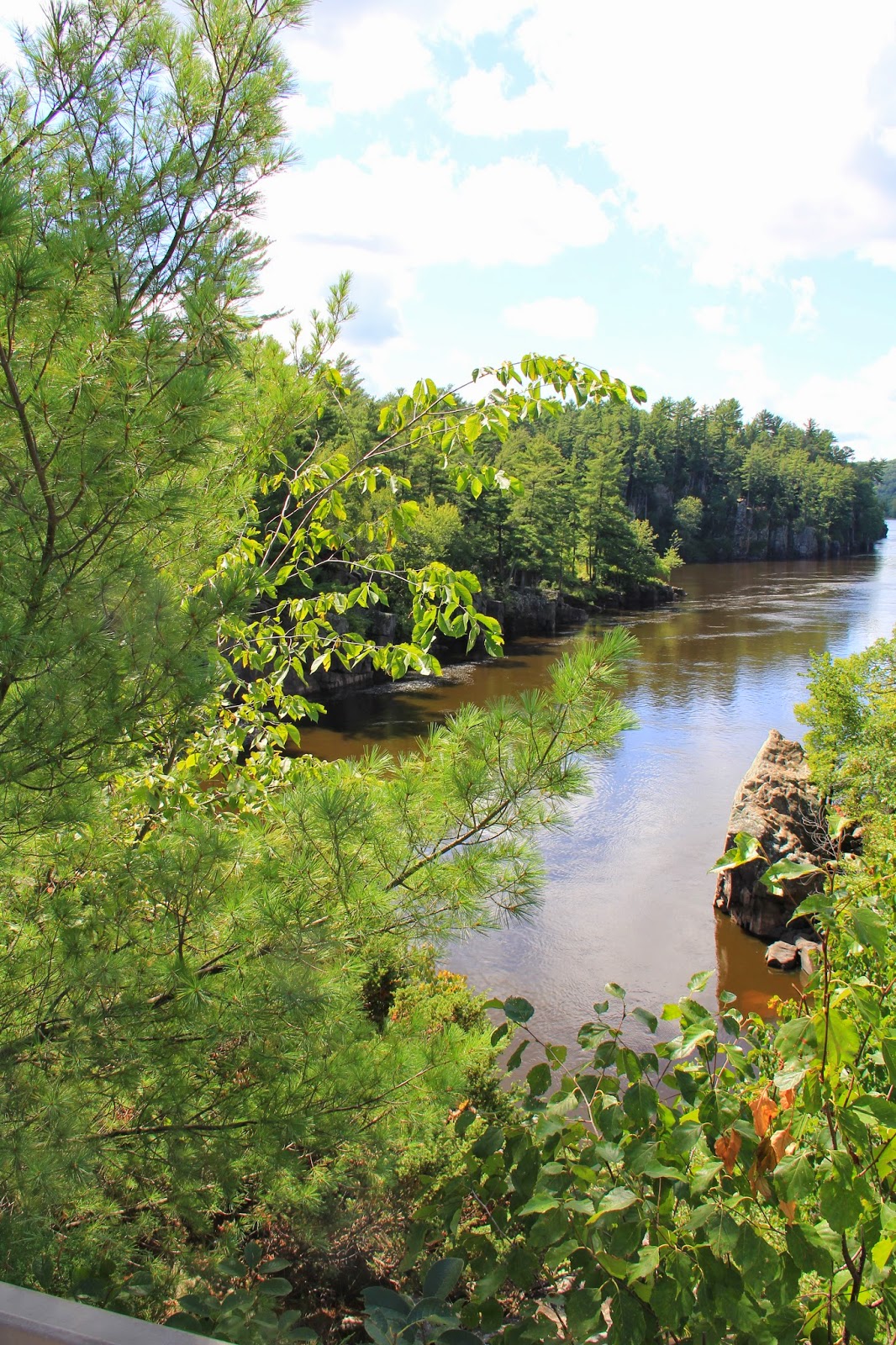
A small park on the western shore of the St. Croix River at the south edge of Taylors Falls it’s full of beauty everyone can appreciate; towering rock, deep flowing water and a mix of broadleaf and boreal forest.  Found within The Dalles of the St. Croix the area is rich in geological, ecological and human history.
Bedrock of basalt lava flows filled a rift valley are over 1.1 billion years old. Sandstones deposited from tropical seas covered the basalt. The current topography was transformed by glaciers.

Here the St. Croix River flows through a valley over a mile wide. The river at this point is typically 70 feet with pools to 100 feet deep. A plaque in the park mentions the trail is 200 feet under the surface of Glacial River St. Croix which quickly reduced Glacial Lake Duluth (current remnant Lake Superior). The main feature of the park is the potholes created by circular erosion of material by the powerful flow of water. Some have been excavated and found to be 60 feet deep, the world’s largest potholes.


Just north of the park is St. Croix Falls Dam which drowned the rapids at the top of the dalles. This hydroelectric plant providing energy for the Twin Cities has recently been supplanted by connection to the Manitoba hydroelectric power grid. Originally a dam was proposed for a lumber mill and transporting timber south. But climax white pine forests were quickly cut and not restored, the timber industry collapsed as the dam was finished. Tourism is the primary industry today. Does the dam serve any purpose? Is restoration of the rapids possible? (See The St. Croix Dam a Fatal Blockage published by Macalester College.)

In 1771 in a great battle at the rapids portage the Ojibway wrested control of the Upper St Croix valley from the Lakota and their allies the Fox. This valley now comprises the St. Croix National Scenic Riverway, one of the original eight National Wild and Scenic Rivers. www.nps.gov/sacn


The park marks a transition from mixed deciduous hardwood to boreal ecologies. This area has been seriously altered through human intervention. The wild demand for timber destroyed the climax White Pine-White spruce-Aspen forest of pre-european settlement. Red Oak-Sugar Maple-Basswood forest has supplanted and dominates surrounding lands. The cliffs and talus slopes are covered with pine and cedar.


We can get inspiration for our gardens from nature in the park.

Much of the area is monumental in scope the scale creates wonder and awe. The river can inspire a water gardener to develop a plan modeled on the river. Replacing the dam, long swift rapids of tumbling water plunge into the deep pools of the basaltic canyon.  Depending on finances a gardener could recreate the river course on a god-like human perspective or with more expense on a half-human scale. Rather than using glacial or river boulders we could use trap rock or something of dense basaltic character. Many photos are taken from a rocky promontory in the park on the Minnesota side. It allows excellent views up and down the dalles. You can use a site on your garden course to the same effect.
 

As you can see by my photos there are many other ideas to adopt. A marker framed by a single monolithic pine.
 

Curtain Falls used to fashion a dry waterfall in an aspen vale.

The drooping branch of a maple reflected in the water at the mouth of a pothole.


A sight rarely created outside of nature, gnarled roots clinging to life, requires vision and time. What beauty in shape and texture can be fashioned. You may diminish scale and time through bonsai or niwaki. These techniques applied to pines and cedar can provide effective replacement.


Interstate Park and the upper St. Croix provide an inspirational guide for creating beauty from nature.

Before you visit download the wildflower and bird checklists from: www.dnr.state.mn.us/state_parks/interstate
 
Blue Vervain