Tuesday, May 28, 2013

Iris versicolor

Dr. Edgar Anderson

Origin of species via hybridization

In the 1920s and 30s Dr. Edgar Anderson of the Missouri Botanical Gardens (MOBOT) and Associate Professor of Botany, Washington University of St. Louis made extensive field trips to examine the variation of form and structure in Iris versicolor, common blue flag. He diagrammed the great amount of genetic variation in natural populations. He found two species rather than one and began to examine how one evolved from the other. His conclusions found more variation within populations of one species than differences between the two species; another species had been involved in the evolution of Iris versicolor. The answer was through hybridization followed by chromosome doubling to produce a fertile, stable, true-breeding amphidiploid. (Melding of the complete chromosome set from each parent.)  His data included chromosome counts and concluded that Iris versicolor (2n = 108), was the amphidiploid progeny of Iris virginica (2n = 70) from the Mississippi valley and Iris setosa var. interior (2n = 38) of the Yukon. Today I. versicolor occurs almost entirely in territory that was covered by ice during Pleistocene glaciation; while I. virginica occurs in untouched areas south. I. setosa var. interior currently growing northwest of the glaciated area, was pushed south by glacial formation into the range of I. virginica. For more information regarding Dr. Anderson visit: http://www.nasonline.org/publications/biographical-memoirs/memoir-pdfs/anderson-edgar.pdf

Dr. Edgar Anderson
Every year of the past decade I have yearned to follow the footsteps of Dr. Anderson following the bloom season up the Mississippi valley. I have wanted to examine the implications of 90 years and 200 million more humans affecting the environment colonized by Iris versicolor. It could also prove useful to collect variation where it still exists to aid hybridization efforts.

Iris versicolor and I. virginica have always been appreciated for their beauty and medicinal qualities. On the practical side these irises are now included in rainwater gardens and vegetative filter strips. Scientific analysis identified these plants as hyperaccumulators, removing pesticides from soils and able to reduce levels of commonly and widely used insecticides and fungicides.
A principle example of the origin of species, of growing practical and aesthetic value, this iris deserves our foremost consideration.  

Sunday, May 19, 2013


Philadelphia Vireo


Yesterday, prior to a spring thunderstorm a few migrating Philadelphia Vireo visited our flowering plum. The flowers attracted pollinating insects which attracted the vireos.


Philadelphia Vireos are very acrobatic, they hovered before the flowers,
and hung upside down to feed.
 
 
These vireos will move into Canada.
 
 
A couple severe thunderstorms have destroyed the blossoms today, the vireos were our visual climax!


Wednesday, May 1, 2013

Spring Arrives!

Martagon Lily
Columbine
Sedum
Standard Dwarf Bearded Iris
Bearberry
Rhubarb

Spring has turned briefly, four days of weather over 60 degrees with a good evening rain. The garden has responded quickly;  martagon lilies are pushing through the surface. Columbine have unfurled green leaves. Sedums dormant through the winter have begun to increase, Standard Dwarf Bearded Iris have doubled in size preparing to flower in a few weeks. Bearberry, evergreen under the snows flush green losing their reddish winter tints. Rhubarb has erupted and their leaves have begun to unfurl, cannot wait to taste the tart stalks.

Martagon lily out of the ground.
 
 
The forecast for Thursday is one to two inches of snow with rain, nighttime temperatures in the low 30s; the jet stream has dipped into the northern states. As the sun rises in elevation throughout spring the jet stream controlling our current weather pattern will swing into Canada.

Columbine sprouts quickly.

These perennials are very hardy and I do not worry for their condition. This week’s weather will continue to delay the season and when given the right conditions plants will quickly respond in a rush to increase and then flower. If climate conditions remain cool, iris for example will be slightly shorter than typical bloom heights and colors will be more intense.


SDBs double in size

Sedums increase
Above average snows and rain will be very beneficial. The Mississippi flows a few miles from my home. This fall channels of the river were dry, this is very rare. Water tables will become replenished.
I have delayed planting stratified seed, I want temps to average 50s nighttime and 70s by midday. Watching seed germinate and the first bloom of new cultivars is the greatest events of spring.

Bearberry turns green out from under the snow
 

Sunday, April 14, 2013


Spring 2013!
Gardening activities still suspended!

Last year the mean temperature for April 14th was 59.9 degrees. The previous day we ventured to New Ulm, Minnesota to sell plants and bulbs, a spring storm produced a tornado and many funnel clouds.  We sold lily bulbs to the public, they could immediately plant their treasures. Today April 14th the temp hovers around 32 degrees and I just came in from shoveling a couple inches of snow and sleet from the driveway!
The first day of spring we shoveled snow from a major storm the previous day! Where is spring?

This stoic has had enough winter!

My wife and I sell plants and lily bulbs at master gardener plant fairs and spring craft shows. The profits allow us to buy exotic seeds and plants, for example, last year I purchased a number of Trollius species and hybrids from around the country.
We share our gardening love and knowledge with the public.

In a few weeks, April 27th, I speak to the Minnesota Chapter of the North American Rock Garden Society (NARGS) on dwarf iris.  http://www.mn-nargs.org.
Enough winter interest!
 
Hopefully perennials will have risen their heads out of the ground!

Monday, March 18, 2013


Cedar Waxwing

One of our favorite garden moments happened last October. We all hope to attract wildlife to our gardens and last fall we enticed one of my favorite birds to enjoy a sprinkler bath. A flock of waxwings migrating south stopped in our plum, they shook the dust off on a hot dry morning.


Saturday, March 16, 2013


Siberian Iris
Seed germination

How to improve Siberian Iris seed germination

Siberian iris seed requires cold stratification, a chilling and drenching which removes enzymes which delay germination. This can be accomplished by sowing seeds in pots and burying the pots to the rim in the ground over winter, frost and rainfall soften the seed coat. This nearly natural process is not completely effective and may require several winters to achieve full germination of viable seeds. In the process the seed itself may loose viability. 
 

The artificial process described below improves the percentage of seed germination; generally well above 85%, in the first year.

I collect the mature seed pods as they begin to split open in fall.  I store the collected seed in marked envelopes, one for each cross, and let the seed dry in envelopes, placed in a cool dry location until January. Watch for fungus on the drying seed.

In January, I encase the seeds from each cross into nylons cut into squares and bundle with a color coded twist tie or rubber band. The bundles are stored in margarine containers (typically I mark the container with the crosses in). I fill the container with tap water to the brim and burp shut.

The containers are stored in the refrigerator for at least 120 days, generally through mid-April. Typically temperatures should be between 34° and 41°F.  The water is replaced on a weekly basis. The water is brownish-green, avoid splashing your eyes!

Bagged seed in container

In mid-April I broadcast the seed in pots or trays and move outdoors to germinate as high temperatures move from the 50s through 70s. I use a soil mix approximately 60 % peat moss with garden soil, planting the seed just below the surface. I water frequently and sprinkle more peat moss over exposed seed.    

To get an additional jump on the growing season I sometimes start the process earlier and germinate seed under grow lights beginning in March.

Another approach after cold stratification is to sow seed in small pots which are bagged with pieces of fruit. The ripening fruit releases ethylene gas which aids in germination.

When the seedlings are 6 to 8 inches tall they are transferred to the garden.  Space the seedlings roughly 8 to10” apart. Some plants will bloom in the second year but nearly all will bloom in three years.

Seedling blooming two years from planting
 

Saturday, March 2, 2013


Hosta
Hosta garden

Shade gardens

Hosta companions

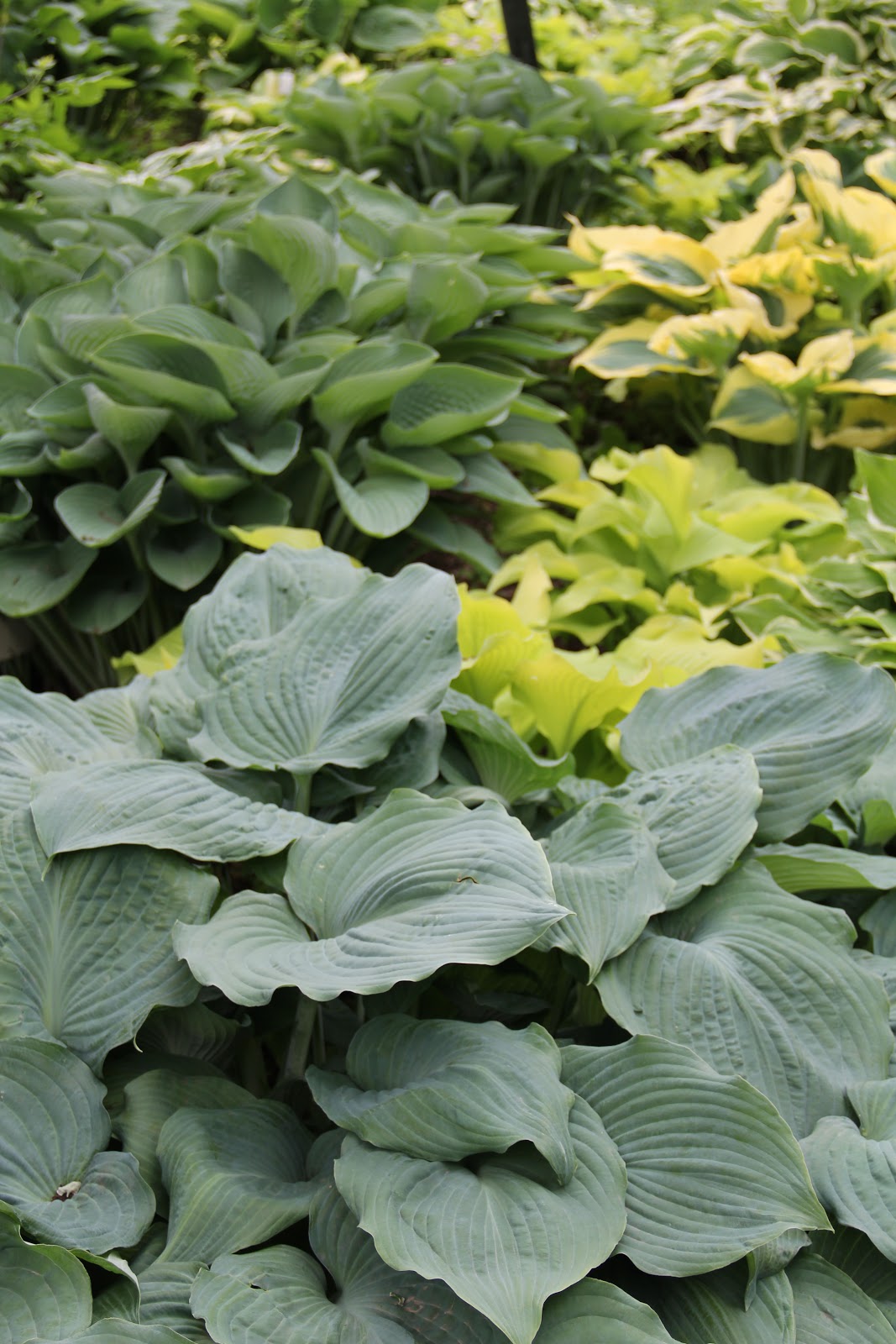
Hosta gardens are ubiquitous in my region. In the last forty years there has been a tissue culture explosion of hybrid cultivars available to gardeners. Large, tall living sculptures and tiny obscure thumbnails can grace the shade. An explosion of textures, leaf colors and forms can transform that shadow place turf cannot control.
There are design elements and companion plants that can spice up your hosta garden. Hosta are building blocks, framework to building an effective shade garden. Many times that is where gardeners stop, the house is framed, but little siding is added to complete the work. Without companions the foundation can be solid to the point of boring, mundane green.

Changing texture
Occasional contrasts of color, texture and shape backed by a solid mass are often very effective methods of painting for the eye. An excellent method is to contrast the prominent feature of a plant in mass with another variety. An example; tall blue-green Hosta nigresens with a yellow-green variegated variety.

Contrasting masses


Blue-green mass with contrasting accents - variegation
Adding tall companion plantings will add an element of structure and succession to your glade. I will add martagon lilies, thalictrum and cimicifuga for color and height. All are long living shade lovers. Each blooms in a different season and has contrasting foliage form and color.
Thalictrum flowers and foliage light and airy


Cimicifuga foliage, blooms in fall

Martagon lilies can be six feet tall

I include Iris cristata in groups between hosta groupings for spring color and contrasting foliage. This early blooming iris provides an opening curtain to hosta groupings unfurling act. Their colonies of vertical foliage provide contrasting form amidst the lateral growth of hosta clumps.  

Contrasting foliage Iris cristata colonies
 
Seek out these companions this spring and watch them transform your shadows.
Please comment on this article! 

Iris cristata "Powder Blue Giant"